

You reach for the leash, glance across the yard, and watch your dog do the one thing that makes every owner's stomach drop. Poop-eating (formally called coprophagia) is one of the most common complaints I hear from dog owners, and also one of the most misunderstood.
The disgust is understandable. But before you panic, know this: in most cases it's explainable, manageable, and not the sign of a broken dog. Here's what's actually going on and what you can do about it starting today.
Quick answer
Dogs eat poop for a range of reasons, many of them normal. Mothers with newborn puppies clean up feces by instinct; puppies often explore it out of curiosity; and some adult dogs develop the habit from boredom, anxiety, hunger, or a learned behavior. Less commonly, it signals a digestive enzyme deficit or an underlying medical condition. Consistent cleanup, leash control during walks, and addressing the root cause resolve most cases. If the behavior is new in an adult dog and comes with weight loss, diarrhea, or ravenous hunger, get your vet involved.
Why dogs eat poop: the causes
1. Instinct: nursing mothers and young puppies
This is the most benign explanation. Mother dogs lick and consume their puppies' feces for the first three weeks of life to keep the den clean and stimulate elimination. Young puppies copy adults and explore everything with their mouths, including feces. Most puppies outgrow it by six months without any intervention.
2. Nutritional gaps and digestive enzyme deficiencies
When the small intestine doesn't produce enough digestive enzymes (or when a diet is low in certain nutrients), stool can still contain partially digested fats and proteins. Dogs are wired to extract calories wherever they can find them, and that can make feces smell appealing in a way it shouldn't. Dogs on poor-quality diets or with exocrine pancreatic insufficiency (EPI) are particularly prone to this. If your dog is also losing weight or producing large, greasy stools, this is worth ruling out with bloodwork.
3. Boredom and under-stimulation
A dog left alone in a yard with nothing to do will find ways to entertain itself. Poop-eating is one of them, especially in intelligent, high-energy breeds. If the behavior only happens when your dog is unsupervised for long stretches, boredom is the likely driver, not a medical problem.
4. Attention-seeking behavior
Some dogs learn quickly that grabbing a piece of poop gets an immediate, dramatic reaction from their owner. Chasing, shouting, and even gentle scolding can all accidentally reinforce the behavior. The reaction becomes the reward.
5. Anxiety and stress
Chronically anxious dogs (those with separation anxiety, fear-based stress, or a history of harsh punishment) sometimes develop compulsive habits including coprophagia. It can also appear as a coping response when a dog has been punished for accidents indoors and starts hiding or destroying the evidence. If your dog is also hyper, restless, or showing other anxious behaviors, that context matters.
6. Hunger
A dog who isn't eating enough (whether from an inadequate feeding schedule, competition from another pet, or a condition that drives voracious hunger like Cushing's disease or diabetes) will scavenge. Dogs who are fed once a day, or who bolt their food and are still hungry, are more likely to turn to stool. Check the guide on why your dog isn't eating but will eat treats for related context.
7. Why dogs eat cat poop specifically
The litter box is a well-known problem. Cat feces is high in protein compared to dog stool, and cat food is calorie-dense, so what comes out on the other end is genuinely more attractive to a dog's nose. This is almost always opportunistic, not medical.
8. Malabsorption and underlying illness
Diseases that interfere with nutrient absorption (including inflammatory bowel disease, parasites, and EPI) can cause coprophagia in adult dogs who never showed the behavior before. This is the category that warrants a vet visit, especially if you're also seeing diarrhea, blood in the stool, vomiting, or significant weight loss.
How to stop your dog from eating poop
These steps work best in combination. If one cause is clearly dominant (boredom, anxiety, hunger), address that root cause first. The rest are management layers.
-
Pick up immediately. Remove the opportunity entirely. Stool that isn't there can't be eaten. Scoop the yard daily and follow your dog on walks before they can circle back.
-
Keep them on leash during outdoor time until the habit is broken. A leash lets you redirect the moment you see them sniff with intent, without the dramatic reaction that reinforces the behavior.
-
Redirect and reward. When your dog finishes eliminating, immediately call them away and reward with a high-value treat. You're building a competing behavior: "pooping = come to me = good things happen."
-
Review their diet. Transition to a higher-quality food if you're feeding a budget kibble, and consider whether your dog is getting enough to eat. Splitting daily portions into two meals can reduce hunger-driven scavenging. Talk to your vet before adding a digestive enzyme supplement. They're widely marketed for this purpose, but the evidence is mixed unless there's a confirmed enzyme deficiency.
-
Increase enrichment. Daily structured exercise, puzzle feeders, sniff walks, and training sessions all reduce boredom-driven behavior. A mentally tired dog is less likely to get creative in the yard.
-
Block access to the litter box. Move it behind a baby gate, inside a closet with a cat door cut in, or on an elevated surface the dog can't reach. This is the fastest fix for the cat-poop problem.
-
Try deterrents cautiously. Adding products like For-Bid or pineapple chunks to food is sometimes recommended on the theory that they make stool taste unpleasant. Controlled evidence is limited, and some dogs are undeterred entirely. These are worth trying only after you've addressed the underlying cause.
If diarrhea or loose stools are part of the picture, resolving those first can also reduce the behavior. Abnormal stool has a different smell profile and may be more attractive to some dogs.
When to call your vet
Coprophagia is a reason to contact your vet (not just Google) when:
- It's new in an adult dog who has never done it before
- Your dog is losing weight despite eating normally or ravenously
- Stools are large, pale, greasy, or foul-smelling (possible EPI)
- There's blood in the stool, vomiting, or persistent diarrhea alongside it
- Your dog eats poop compulsively and no behavioral intervention slows it down
- You suspect parasites (bring a stool sample to the visit)
These signs point to a medical workup (stool exam, bloodwork, possibly imaging) rather than a training solution.
Can supporting gut health and calm help?
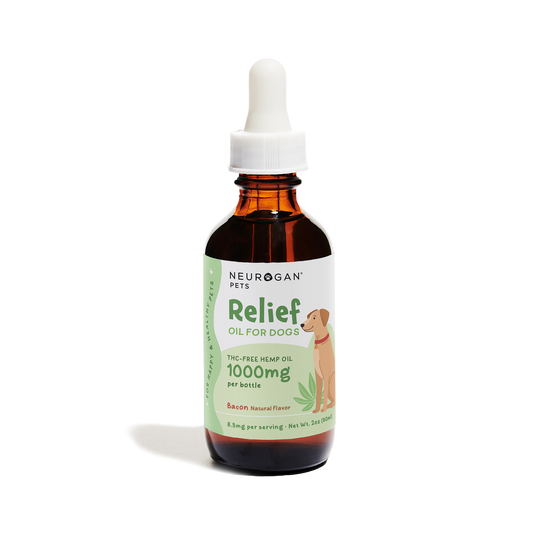
If your vet has cleared your dog medically and the behavior is clearly stress- or anxiety-driven, reducing baseline anxiety can help break the habit. Our CBD dog collection includes oils and treats formulated to support calm without sedation. For anxious dogs, this can be one piece of a broader management plan. It isn't a cure for coprophagia, but it may help lower the background tension that feeds compulsive behaviors.
Neurogan Pets products are hemp-derived and non-psychoactive (under 0.3% THC), third-party batch-tested, and not FDA-approved to treat, cure, or prevent any condition. Introduce gradually, follow the serving guidance, and check with your vet first.
As always: address nutrition, exercise, and environment first. Supplements support a solid foundation; they don't replace it.
FAQ
Is it normal for dogs to eat poop? It's common. Studies suggest roughly 16% of dogs eat feces frequently. It's more normal in puppies and nursing mothers than in adult dogs. Normal doesn't mean you have to accept it; it's very manageable once you identify the cause.
Can my dog get sick from eating poop? Yes, there's real risk. Eating another animal's feces can transmit intestinal parasites, bacteria like Salmonella and Campylobacter, and parvovirus. The risk is highest from stool of unknown animals. Make sure your dog is current on parasite prevention if this is an ongoing habit.
Why does my dog eat grass and then poop? These are separate behaviors, but both can reflect a digestive system that's off. For the grass-eating side, see our guide on why dogs eat grass. The two habits sometimes co-occur in dogs with GI discomfort.
Will my dog grow out of eating poop? Puppies usually do. Most stop between 4 and 9 months as novelty fades and they learn what's food. Adult dogs who pick it up as a habit are less likely to self-correct and usually need active management.
Do deterrent products actually work? The evidence is weak. Most veterinary behaviorists say they're worth trying but shouldn't be your only strategy. Consistent cleanup and behavioral redirection have a better track record than adding pineapple to kibble.
Is coprophagia a sign of a vitamin deficiency? It can be, but this is overstated in popular advice. True vitamin deficiencies are uncommon in dogs fed complete commercial diets. A digestive enzyme deficiency (EPI) is a more likely medical explanation when nutrition is involved. Your vet can screen for both.
The bottom line
Your dog eating poop is revolting, but it's rarely a crisis. Puppies and nursing mothers do it by instinct. Adult dogs usually do it from boredom, anxiety, hunger, or a learned habit, and a small number have an underlying medical reason. Start with the basics: clean up immediately, manage access, audit the diet, and add enrichment. If the behavior is new, worsening, or paired with GI symptoms, let your vet run the numbers before you try to train your way out of a medical problem.
This article is for informational purposes only and does not replace professional veterinary advice. Always consult your vet before making significant changes to your dog's diet or health routine.
References
- American Kennel Club: "Why Does My Dog Eat Poop? Coprophagia Explained."
- VCA Animal Hospitals: "Coprophagia (Stool Eating) in Dogs."
- Merck Veterinary Manual: "Coprophagia and Pica in Small Animals."