

It's normal to notice your dog panting after a run or on a hot afternoon. Panting is how dogs cool down since they can't sweat through their skin. What's less normal is a dog who pants heavily at rest, at night, or out of nowhere, and won't stop. That's when the question shifts from "is this fine?" to "should I be worried?"
The honest answer is: it depends on the context. This guide breaks down the most common causes of excessive panting, the harmless ones and the serious ones, so you know exactly what you're dealing with and what to do about it tonight.
Quick answer
Dogs pant to regulate body temperature, but excessive panting in dogs is a concern when it happens at rest, at night, or without a clear trigger like exercise or heat. Common harmless causes include warmth, excitement, and breed traits. Serious causes include heatstroke, anxiety, pain, heart or respiratory disease, Cushing's syndrome, and poisoning. If your dog is panting heavily alongside restlessness, pale gums, weakness, or vomiting, treat it as urgent and call your vet.
Why is my dog panting so much? 8 causes explained
1. Heat and normal thermoregulation
Panting is a dog's primary cooling mechanism. They push air over the moist surfaces of the mouth, tongue, and upper respiratory tract to evaporate heat. After exercise, on a warm day, or in a hot car, heavy panting is completely expected and should ease within 10-15 minutes once your dog is in a cooler, calm spot.
Watch for: panting that won't slow down even after 15-20 minutes of rest in a cool environment. That's when heat becomes a hazard.
2. Heatstroke: the emergency
Heatstroke occurs when a dog's core temperature rises above 104°F (40°C) and the panting can't cool them down fast enough. It can develop in minutes: in a parked car, in direct sun, or during intense exercise in humid weather. This is a life-threatening emergency.
Signs of heatstroke beyond heavy panting:
- Bright red or purple gums and tongue
- Thick, ropy saliva
- Disorientation, stumbling, or weakness
- Vomiting or diarrhea
- Collapse or seizures
If you suspect heatstroke: move your dog to a cool area immediately, apply cool (not ice-cold) water to the paw pads, groin, and neck, and get to a vet without delay. Do not wait to see if they improve on their own. Organ damage can happen within minutes.
3. Anxiety, stress, and fear
Emotional panting is one of the most overlooked causes. Anxiety triggers the same fight-or-flight response in dogs as in humans. Heart rate climbs, breathing accelerates, and panting follows. Common triggers include thunderstorms, fireworks, separation from their owner, vet visits, car travel, and changes in routine.
Anxiety panting often comes with other clues: pacing, restlessness, yawning, lip-licking, whining, or a tucked tail. If your dog pants most at night or specifically when left alone, stress is a likely driver. A dog panting and restless at the same time points strongly in this direction. Both are classic anxiety signs.
4. Pain
Dogs mask discomfort well, and panting can be the most visible signal that something hurts, especially chronic pain from arthritis, an injury, or an internal issue. Pain-related panting tends to be out of proportion to the environment: your dog is panting heavily in a cool, quiet room, and it may worsen at night when distractions disappear.
Look for: a hunched posture, reluctance to move, flinching when touched in specific areas, or a sudden change in behavior alongside the panting.
5. Heart and respiratory disease
Conditions that reduce the heart's efficiency or compromise lung function (heart failure, pneumonia, fluid in the chest, tracheal collapse) all make it harder to get enough oxygen. The dog's body compensates by breathing faster and harder. This type of panting often worsens with mild exertion and may come with a persistent cough, a bluish tint to the gums, or exercise intolerance.
Brachycephalic breeds (Bulldogs, Pugs, French Bulldogs, Shih Tzus) are at higher structural risk for respiratory-driven panting due to their narrowed airways.
6. Cushing's disease (hyperadrenocorticism)
Cushing's disease causes the adrenal glands to overproduce cortisol. One of its earliest and most consistent signs is excessive panting, often most noticeable at night and in older dogs. It typically appears alongside a pot-bellied appearance, increased thirst and urination, hair loss, and skin changes.
If your middle-aged or senior dog has been panting more for weeks with no other clear cause, ask your vet about a Cushing's screen.
7. Medication side effects
Certain drugs cause panting as a direct side effect. Steroids (prednisone, dexamethasone) are the most common culprit. If your dog started panting heavily shortly after beginning a new medication, that's almost certainly the reason. Don't stop the medication on your own. Talk to your vet about the dose or alternatives.
8. Poisoning
Toxins that affect the nervous system or cardiovascular system can trigger rapid, heavy panting, often alongside trembling, vomiting, drooling, or collapse. Chocolate, xylitol, grapes and raisins, certain plants (azalea, sago palm), caffeine, and some human medications are common culprits. If there's any chance your dog got into something toxic, this is an emergency.
What you can do right now
- Remove the trigger if you can. Get them out of heat, away from a stressor, into a calm and cool space.
- Check the gums. Healthy gums are pink and moist. Pale, white, blue-tinged, or bright red gums are emergency signals.
- Take the temperature. A rectal temperature above 104°F (40°C) is heatstroke territory. Go to the vet.
- Cool down gently for heat-related panting. Offer cool water, apply cool damp towels to the paw pads and groin. Avoid ice, as it can cause blood vessels to constrict and trap heat.
- Note what changed. New medication? Stressful event? Different schedule? Timeline and context are exactly what your vet needs.
- Don't give human medications. Aspirin, ibuprofen, and acetaminophen are toxic to dogs. Wait for veterinary guidance.
When to call your vet
Call your vet or an emergency animal hospital immediately if the panting:
- Won't slow down after 15-20 minutes of rest in a cool, calm environment
- Comes with pale, blue, or bright red gums
- Follows possible toxin exposure
- Is accompanied by vomiting, collapse, stumbling, or seizures
- Seems tied to pain (hunching, flinching, reluctance to move)
- Is a new pattern in an older dog, especially at night
- Has been going on for more than a day or two with no obvious explanation
When the cause isn't clear, don't wait it out. Heatstroke, heart failure, and poisoning can deteriorate quickly.
How calming support may help anxiety-driven panting
If your vet has ruled out medical causes and the panting is clearly stress- or anxiety-driven (tied to storms, fireworks, travel, separation, or other known triggers), there's room for calming support alongside behavioral approaches.
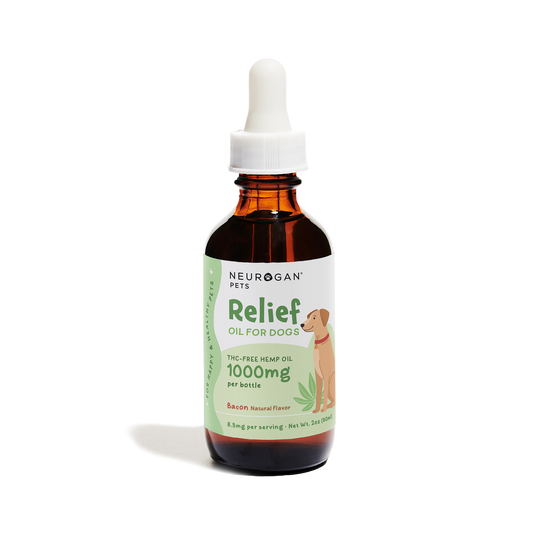
Our CBN Calming Dog Treats are formulated for these moments. Given 30-45 minutes before a predictable stressor, they may help your dog settle without sedation. For dogs who respond better to a flexible serving, a few drops of Bacon Flavor CBD Dog Oil stirred into their food offers another option. You'll find both in our calming range for dogs.
Neurogan Pets products are hemp-derived and non-psychoactive (under 0.3% THC), third-party batch-tested, and not FDA-approved to treat, cure, or prevent any condition. Introduce gradually, follow the serving guidance, and check with your vet first.
A note on expectations: calming aids may support anxious behavior. They don't treat underlying medical conditions. If your dog pants from pain, heart disease, or Cushing's, those need veterinary care first. For more on managing anxiety in dogs, these guides go deeper: CBD for hyper dogs, CBD for dog aggression, and how to find the right CBD serving for your dog.
FAQ
Why is my dog panting heavily at night? Nighttime panting most commonly points to anxiety, pain, or Cushing's disease. When daytime distractions quiet down, dogs with chronic discomfort or elevated cortisol often pant more. If your dog pants heavily at night but seems fine during the day, a vet visit is worth it, particularly to screen for Cushing's in middle-aged and senior dogs.
Is dog panting and restlessness serious? Together, they're a classic sign of anxiety or pain, and occasionally the early stages of a serious condition like bloat (GDV) or heatstroke. If your dog is panting, can't settle, and seems distressed, watch closely for other symptoms (a swollen belly, retching, pale gums) and contact your vet if it doesn't resolve in 20-30 minutes.
How do I know if my dog is panting too much? A useful benchmark: panting that continues for more than 15-20 minutes at rest, in a cool room, without an obvious trigger like recent exercise is excessive. Also note intensity. Normal panting is rhythmic and easy. Distress panting is often faster, louder, more labored, or paired with a wide, tense mouth and worried eyes.
Can anxiety alone cause excessive panting in dogs? Yes. Anxiety is one of the most common causes of unexplained panting, especially in dogs with noise phobias, separation anxiety, or high-stress temperaments. It's the same physiological response as human shortness of breath during a panic response, and it can be just as intense.
What breeds pant the most? Brachycephalic (flat-faced) breeds (Bulldogs, Pugs, French Bulldogs, Boston Terriers) pant more than other dogs because their narrowed airways make breathing inherently less efficient. High-energy working breeds may also pant more simply due to activity level. For these dogs, heavy panting is part of baseline, but sudden increases still warrant attention.
Could my dog's panting be a medication side effect? Very possibly, if they're on steroids (prednisone, dexamethasone) or certain other drugs. Steroid-induced panting is common and usually dose-dependent. Mention it to your prescribing vet. Sometimes adjusting the dose or timing helps.
The bottom line
Most panting is completely normal. Your dog is warm, just played hard, or got excited about the squirrel outside. But excessive panting in dogs that persists at rest, occurs at night, or appears alongside any other symptoms deserves a closer look. Heatstroke can escalate in minutes. Pain, Cushing's, and heart disease need a diagnosis to be treated properly.
Rule out the serious stuff first. If what's left is anxiety, a calm environment and the right support can make a real difference for your dog and for you.
Always consult your veterinarian for personalized advice, especially if panting is new, worsening, or paired with any other changes in your dog's behavior or health.
References
- American Kennel Club: "Why Is My Dog Panting Excessively?"
- VCA Animal Hospitals: "Breathing Difficulties in Dogs."
- Merck Veterinary Manual: "Heat Stroke and Hyperthermia in Dogs."
- VCA Animal Hospitals: "Cushing's Disease in Dogs."